IN
IN

 USA
USA
 CA
CA
 IN
IN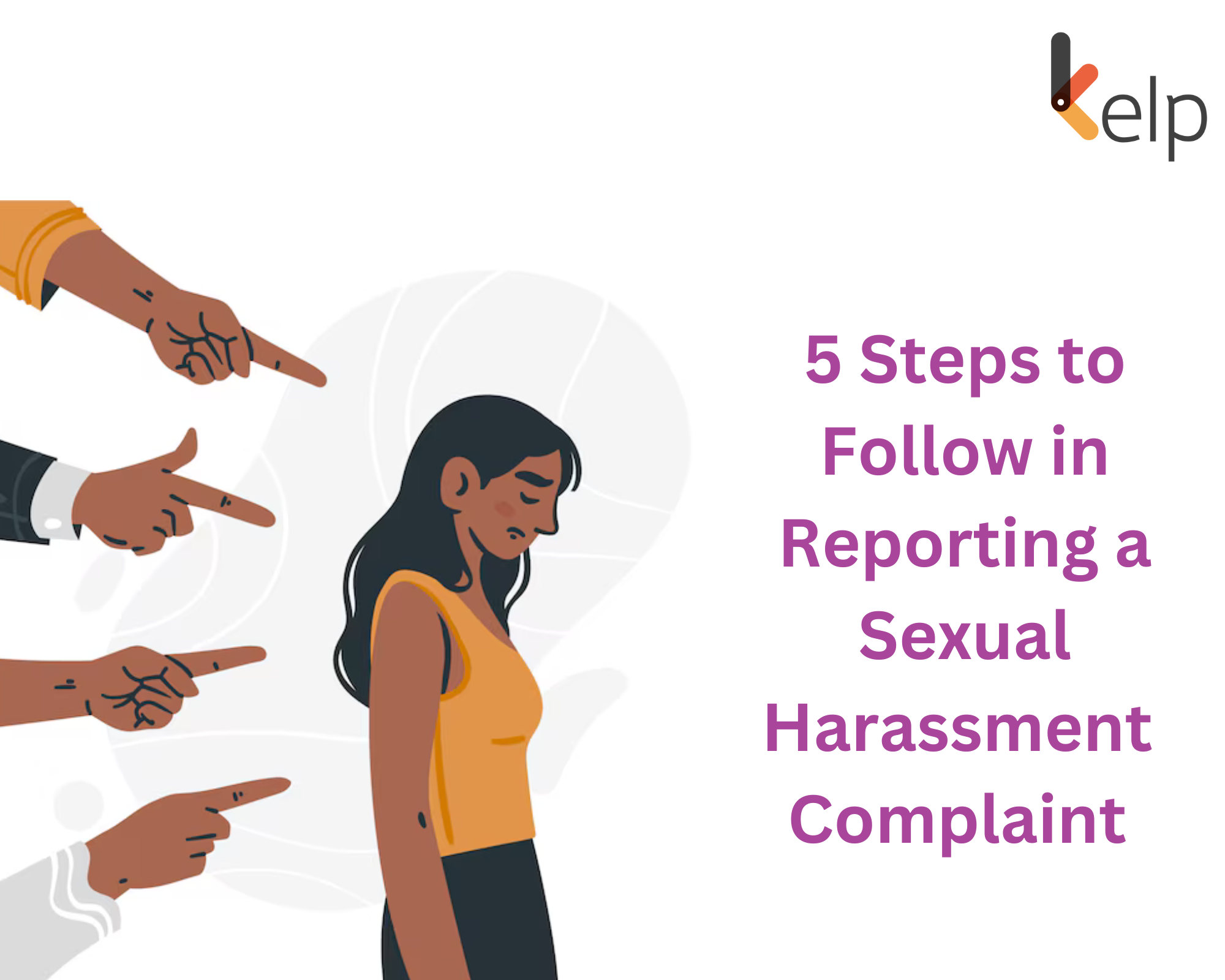
By Akshaya Rajaraman
Sexual harassment, by definition, encompasses any unwanted sexual behavior that causes fear, offense, humiliation, or distress to an individual, or is intended to do so. This type of harassment can manifest in various forms, including physical and verbal actions. Enduring such harassment can lead to severe consequences for the victim’s mental health and overall well-being.
Responding to instances of harassment in a workplace is a delicate and intricate matter, necessitating a thoughtful and systematic approach. It is crucial for individuals to understand how to effectively address such behavior to foster a safe and respectful work environment.
Let’s explore a scenario to delve into the question of how one should report instances of harassment.
Anjali recently joined ABC Limited and reports to Rajesh. On her birthday, Rajesh wished her via WhatsApp, and their conversation extended late into the night. During their chat, Rajesh, who admitted to being under the influence of alcohol and began questioning Anjali about her personal life and shared inappropriate pictures of himself. Anjali was shocked by this behavior and promptly blocked Rajesh’s number. Because this incident occurred digitally, Anjali was unsure if it constituted sexual harassment under the PoSH ACT and was unfamiliar with the reporting procedures.
Considering the above situation, Anjali should ideally follow the following 5 steps to respond to such behaviour.
Step 1 – Recognise & Indentify
Anjali must first IDENTIFY such a behaviour and RECOGNIZE it to be a form of Sexual Harassment. In order to identify she must learn what constitutes a sexual harassment.
Section 2(n)(iii) and Section 2(n)(iv) of the PoSH ACT clearly states that “making sexually coloured remarks and showing pornography amounts to sexual harassment.” When an incident causes any form of discomfort and uneasiness, the affected person must immediately identify such a behaviour and recognise it as it is important to report it to the appropriate authority. This could be a manager, HR, trusted colleague or a member of the internal committee. So now, we have identified & recognised that Rajesh’s behaviour amounts to Sexual Harassment.
Step 2 – Avoid Self Blaming
There are various coping mechanisms that victims of sexual harassment resort to and one such is SELF BLAMING. Victims tend to blame themselves for the actions of the abuser and this is one of the unhealthiest ways of handling such situations. It is understandable that every victim would question “why me?”, but one has to understand that, one’s behaviour has no relation to the actions of an abuser.
The clothes you wear,
the way you speak,
the way you laugh or
the way you walk cannot define your intentions and have no connection with the way the abuser perceives you.
An abuser’s behaviour is solely dependent on their evil motives and unethical thought process. Here, one way that Anjali might self-blame is by stating that “I shouldn’t have texted him until midnight”. Anjali has to understand that, her texting him until midnight wasn’t the root cause of the problem; the root cause was solely Rajesh’s ulterior motive.
Step 3 – Sharing
Speaking about the coping mechanisms, SHARING one’s experiences helps them to feel less isolated and more connected. This helps one to think clearly, rationally and helps in decoding the entire situation in a better way. It also helps to feel safer and supported which helps the victim from major mental health issues. It is also advised that you share your story only with the people you wholly trust and someone who would have your back. Sharing such instances also helps the victim to have a better knowledge about the various remedies available and most importantly prevents them from self blaming. Anjali could share her experiences with her near and dear ones including her trustworthy office colleagues so that she can get comforted and feel safer such an environment.
Step 4 – Reporting
REPORTING sexual harassment plays a crucial role, because it helps the appropriate authority to investigate the allegations put forward and take the appropriate actions. Anjali may also look into the company’s policy regarding the reporting mechanism and can either file a written complaint to the internal committee or email the same to the email ID mentioned in the company’s policy.
Anjali must also include the screenshots of the chats, dates, time, witness if any and the nature of harassment. It is always advisable to take screenshots of such instances as it can be used as evidence during the investigation and would act as a solid proof for such behaviour. Anjali must also keep in mind that the complaint must be made within 3 months from the date of the incident or the last incident. The PoSH ACT strictly prohibits any form of retaliation i.e. the act of provoking assault and is punishable under the provisions of the act.
Step 5 – Seek Help when Required
Anxiety, depression, post-traumatic stress disorder (PTSD), flashbacks, intrusive memories, nightmares, emotional distress, diminished self-esteem, self-blame, shame, and guilt are some of the various mental health conditions that a victim of sexual harassment experiences. Victims must understand that, none of these are their fault and SEEKING HELP to process such harassment & handle the aftermath is never a sign of weakness. Often people tend to stay in silence and act normal in the fear of gas lightning and embarrassment. This can result in a hostile work environment. Victims should understand that voicing out what happened not only ensures justice for them but also prevents the next person from experiencing something similar.
If you’d like to know more about how to recognize and identify sexual harassment and the methods for prevention of sexual harassment, prohibition and redressal under the Sexual harassment of Women at Workplaces Act 2013 commonly known as the PoSH Act of 2013, contact us at info@kelphr.com, call +91-9500129652, visit www.kelphr.com
About Kelp
Established in 2013, Kelp’s mission is to deliver the best HR solutions to businesses and enhance workplace environments across industries. Over the past decade, we have served over 800 clients in India and internationally, focusing on PoSH (prevention of sexual harassment at the workplace), D, E & I (Diversity, Equity & Inclusion), and EAP (Employee Assistance Programs). While our services span various areas, our core goal remains consistent: to foster safer, more inclusive, and productive workplaces.
For inquiries about our services related to Prevention of Sexual Harassment (PoSH), Diversity, Equity, and Inclusion (D,E &I), or Employee Assistance Programs (EAP), please reach out to us at info@kelphr.com or call +91-95001-29652. Our advisors will tailor customized offerings to suit your organization’s needs.